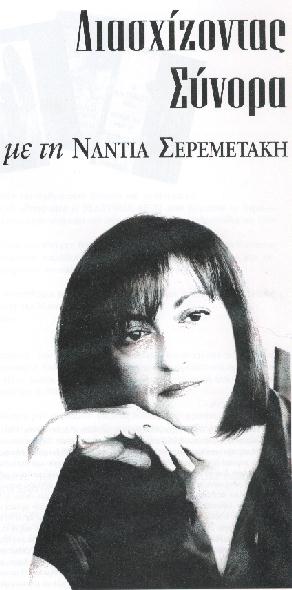
Crossing Borders with Nadia Seremetakis
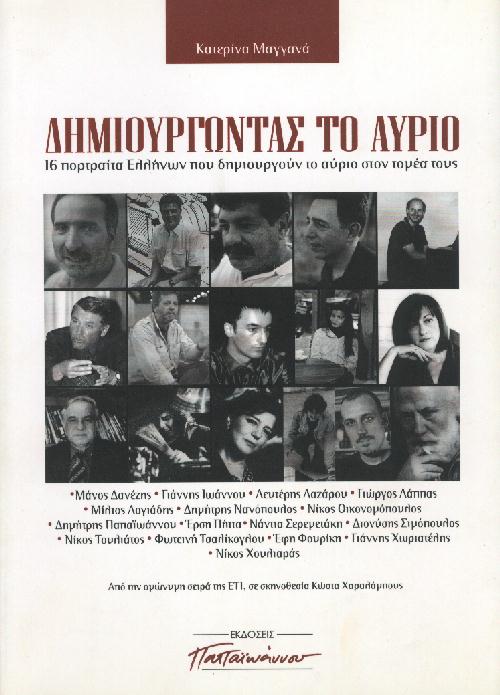
Creating Tomorrow
A documentary series about prominent figures who excel in their respective fields and help create a better tomorrow for us all. It captures their lives and thoughts, “steals” a few moments from them, and offers the joy of the meaningful connection we were able to share with them.
The book Creating Tomorrow, like the television documentary, enters into dialogue with people who live the future as the present and who have shaped its coordinates according to their own inner sense of time, regardless of age. These are people whose contribution, dynamism and work concern us all, not merely on an informational level but in a deeper and more meaningful sense. Contact with them can help make us better human beings. For this reason, such a record of words and thoughts becomes especially important today, in the course of an era that, amid its speed, is forgetting its deeper self.
The guests featured in the documentary and in this volume have demonstrated through their lives and work that they are capable of resisting the sweeping emptiness and the allure of easy solutions.
They all possess the gift of genuine generosity and had the openness to share it, engaging tirelessly with us throughout the many demanding hours of television filming, as well as during our lengthy meetings for this publication.
Papaioannou Publications
Crossing Borders with Nadia Seremetakis
– Έχετε εκδώσει πολλά βιβλία και άρθρα στην Ελλάδα και το εξωτερικό. Ένα απ’ αυτά είναι η γνωστή εθνογραφία Η ΤΕΛΕΥΤΑΙΑ ΛΕΞΗ στης Ευρώπης τα Άκρα — Δι-Αίσθηση, θάνατος, Γυναίκες, έργο ιδρυτικό στο χώρο της ελληνικής ανθρωπολογίας. Πώς θα το ορίζατε;
Μια εθνογραφία για το σύνορο και ως σύνορο. Βρίσκεται στο όριο μεταξύ ζωής και θανάτου, ονείρου και ξυπνητής πραγματικότητας, παράδοσης και νεωτερικότητας, περιφέρειας και κέντρου. Είναι ένα βιβλίο συγκεντρωμένων, ανεπίλυτων ιστορικών εντάσεων.
– Το βιβλίο αυτό είναι το αποτέλεσμα μιας μακρόχρονης επιτόπιας έρευνας. Τι σημαντικό σας έμαθαν εσάς οι γυναίκες της Μάνης όλα αυτά τα χρόνια;
Την ελληνική έννοια της ποίησης.
– Που σημαίνει;
Σημαίνει τόσο την υλική κατασκευή όσο και τη φαντασία. Γιατί η ποιητική της περιφέρειας έχει να κάνει πάντοτε με τη φαντασιακή διάσταση υλικών κόσμων, πραγμάτων και προσώπων που γίνονται και ξεγίνονται. Στη Μέσα Μάνη, για παράδειγμα, αυτή η φαντασιακή διάσταση αναδύεται από τη σχέση των γυναικών με το θάνατο.
– Γράφετε ποίηση η ίδια. Κάποτε μας εκπλήξατε όταν σε διεθνές επιστημονικό συνέδριο παλαιοανθρωπολόγων στη Μάνη αντί για τον συνήθη εναρκτήριο χαιρετισμό που περιμέναμε, σας ακούσαμε να αυτοσχεδιάζετε, όπως μια κλασσική ΜεσοΜανιάτισα, ένα οχτασύλλαβο ποίημα – μοιρολόι που μάλιστα κρίθηκε «αριστούργημα» και τυπώθηκε σε διάφορα έντυπα…
(Γελάει…) Ναι, με τίτλο Αντιφώνηση. Ήταν μια άλλη εν-γραφή της ΤΕΛΕΥΤΑΙΑΣ ΛΕΞΗΣ. Παρεμπιπτόντως, στην ανθρωπολογία αυτό ονομάζεται Εθνοποιητική.
– Η ΤΕΛΕΥΤΑΙΑ ΛΕΞΗ, είναι ένα βιβλίο που πραγματεύεται, μεταξύ άλλων, το θέμα θάνατος. Πώς επιλέξατε ένα τέτοιο θέμα όντας τόσο νέα η ίδια τότε;
(Γελάει…) (Γελάει… ) Δεν επέλεξα εγώ το θέμα. Μάλλον το θέμα επέλεξε εμένα… Όταν ξεκίνησα για επιτόπια έρευνα σκόπευα να μελετήσω τους πειρατές και τους ληστές της περιοχής. Σύντομα βρέθηκα να παρακολουθώ τρεις και τέσσερις τελετουργίες του θανάτου κάθε εβδομάδα. Ιδού το θέμα της ιστορίας, σκέφτηκα.
– Κι όμως μιλάτε και γράφετε για τον Έρωτα συχνά.
Έρως και θάνατος: έννοιες άρρηκτα δεμένες στην ελληνική σκέψη και κουλτούρα…
–Γράφετε με πάθος. Τι είναι πάθος για σας;
Το σημείο σμίξης του έρωτα και του θανάτου (τον θάνατο του εαυτού εννοώ εδώ)
–Τι είναι εν τέλει ανθρωπολογία για σας;
Είναι «η μελέτη των ανθρώπων σε κρίση από ανθρώπους σε κρίση».
– Με τι θα παρομοιάζατε μια τέτοια ανθρωπολογική έρευνα;
Με ένα ποίημα. Τι θα λέγατε για την Ιθάκη του Καβάφη;
Μπαίνεις στο ταξίδι νέος και βγαίνεις με άσπρα μαλλιά…
– Πώς «μοντάρετε» όλες αυτές τις εμπειρίες στο κείμενο; Και χρησιμοποιώ αυτό τον όρο γιατί μιλάτε για «μοντάζ», κάτι που, μεταξύ άλλων, κάνει το έργο σας δημοφιλές και στο χώρο του ντοκυμαντέρ.
Η διαδικασία της συναρμολόγησης και του μονταρίσματος στο κείμενο αντιγράφει τη δυναμική της εθνογραφικής έρευνας και αναζήτησης, μιμείται τις απρόσμενες αντιπαραθέσεις της εθνογραφικής επιτόπιας εμπειρίας. Ο εθνογράφος ας πούμε πως είναι ένας «ντεντέκτιβ». Μπαίνει σε μια κοινωνία από έναν τόπο ή αντίληψη και υποψιαζόμενος έναν «ένοχο», αλλά μια σειρά από απρόσμενα «σημάδια», ενδείξεις, τον οδηγούν και εμφανίζεται σε άλλο, απρόσμενο τόπο με μια σειρά από άλλους «ένοχους». Ο συνδυασμός αυτών των «σημαδιών», η δυναμική της διάβασης μέσω του φαινομενικά ασύνδετου, αποκαλύπτει την κοινωνική και ιστορική δομή.
– Ξεκινήσατε από λογοτεχνία-ποίηση, πώς συνεχίσατε με κοινωνικές επιστήμες και συγκεκριμένα κοινωνιολογία και ανθρωπολογία;
Οι Κοινωνικές Επιστήμες και ειδικότερα η Κοινωνιολογία ως νέος κριτικός λόγος υποσχόταν πολλά μετά τη χούντα στην Ελλάδα. Την ακολούθησα και έκανα μεταπτυχιακές σπουδές στο New York University. Η συγκεκριμένη Σχολή έδινε έμφαση στις ποσοτικές μεθόδους έρευνας, όπως στατιστική ανάλυση, προγραμματισμό σε κομπιούτερ, κλπ., πράγματα που αποδείχτηκαν χρήσιμα αργότερα στη ζωή μου, αλλά τότε δεν με ενέπνεαν. Βίωνα την πολιτισμική διαφορά σε καθημερινή βάση και αναζητούσα ερμηνεία… Στράφηκα στην Ανθρωπολογία όπου ολοκλήρωσα άλλο ένα Μ.Α. (μεταπτυχιακό δίπλωμα) και συνέχισα για Ντοκτορά (Ph.D). Αυτό σήμαινε τετραετή μεταπτυχιακή φοίτηση και ενός έτους επιτόπια έρευνα πριν αρχίσει η συγγραφή της διατριβής. Κατά τη φοίτηση μαθήτευες σε μια γκάμα ειδικοτήτων και επιστημών που μελετούν την «ανθρωπότητα», όπως αρχαιολογία, κοινωνική γλωσσολογία, βιολογική και φυσική ανθρωπολογία, πολιτισμική και κοινωνική ανθρωπολογία, εθνολογική θεωρία.
– Αντιπροσωπεύετε την Αμερικάνικη Σχολή Ανθρωπολογίας;
(Χαμογελάει, με περίσκεψη) Ας πούμε καλύτερα ότι αντιπροσωπεύω πια τη δική μου Σχολή… Αλλά μια ματιά και πολύ ενωρίτερα, στα μεταπτυχιακά μου χρόνια ακόμη, αποκαλύπτει πως τα σύνορα των Σχολών, όπως όλα τα σύνορα άλλωστε, διαρρέουν. Σπούδασα σε μεταπτυχιακό πανεπιστήμιο της Νέας Υόρκης (The New School Social Research) στις ΗΠΑ που είχε ωστόσο ιδρυθεί από μια Ευρωπαϊκή διασπορά διανοούμενων, εξόριστων από τους Ναζί, μεταξύ των οποίων και οι Levi Strauss, Roman Jacobson, Hannah Arendt κ.α. Η εμπειρία τους σε δύο ηπείρους δεν άφηνε χώρο, τόσο στην πολιτική τους, όσο και στις θεωρίες τους, για αφελή ευρωπολατρεία και αντι-αμερικανισμό ή αμερικανο-λατρεία και ευρωπο-φοβία. Όπως κάθε Διασπορά, ξετύλιγαν τις ταυτότητές τους και τις θεωρίες τους κάτω από πολλαπλούς πολιτισμικούς κώδικες. Ιδανικό περιβάλλον για μια προηγμένη ανθρωπολογία της εποχής.
Η Βρετανική, Γαλλική και άλλες σχολές ανθρωπολογίας όπως διαμορφώνονταν στα εθνικά τους πλαίσια, δεν ήταν απλώς γνωστές αλλά επαρακολουθούντο και εμελετούντο στο συγκεκριμένο πανεπιστήμιο που προωθούσε μια σφαιρική αντίληψη και γνώση της ανθρωπολογίας σε σχέση πάντα με τα τρέχοντα παγκόσμια γεγονότα.
Αυτό δεν συνέβαινε στις Ευρωπαϊκές σχολές ανθρωπολογίας που ήταν πολύ πιο καθορισμένες και συνδεδεμένες με την εθνική πολιτική και γλωσσική ταυτότητά τους. Στην Ελλάδα η κατηγοριοποίηση της ανθρωπολογίας κατά σχολές σημαίνει μάλλον ανεπαρκή γνώση και εμπειρία αυτής της επιστήμης. Δείχνει επίσης έλλειψη μιας διαπολιτισμικής οπτικής της ιστορίας της ανθρωπολογίας και των μεθοδολογικών διαφορών της από άλλες κοινωνικές επιστήμες.
– Θεωρείτε την ερευνά σας στη Μάνη ή τη Μεσσηνία «επιστροφή πίσω» μετά από ένα μακρύ ταξίδι στο εξωτερικό;
Δεν υπάρχει πίσω.
–Τα βιβλία σας έγιναν δεκτά με ενθουσιασμό από τη διεθνή επιστημονική κοινότητα. Από την ελληνική;
(Σε αργό τόνο) Από εκείνα τα μέλη της επιστημονικής κοινότητας που δεν αρκούνται στο μέτριο και δεν απειλούνται από το καλό…
–Τα βιβλία σας, πέρα από την επιστημονική εγκυρότητα και τη λογοτεχνική γραφή τους, σχολιάστηκαν στο σύνολό τους και από πλευράς αισθητικής…
Βιβλία ακαλαίσθητα; (σχεδόν θυμώνει). Είναι σα να γεννάς παιδιά και να επιτρέπεις να στα ντύνουν με κουρέλια…
– Μιλάτε συχνά για τις «άλλες γλώσσες» του βιβλίου…
(Βηματίζει ψηλαφίζοντας ένα βιβλίο της) Το βιβλίο είναι ένα «ομιλόν αντικείμενο» που κινητοποιεί διάφορες εσωτερικές και εξωτερικές γλώσσες. Οι περισσότεροι αναγνώστες, ιδίως του επιστημονικού βιβλίου, διαβάζουν το βιβλίο για το τι λέει, καταναλώνουν δηλαδή το περιεχόμενο του εσωτερικού κειμένου. Με πόσους όμως ακόμη τρόπους μπορεί να διαβαστεί ένα βιβλίο; Με πόσα διαφορετικά μέσα και φωνές επικοινωνεί ένα βιβλίο; Δεν εννοώ μόνο τις διάφορες μορφές γραφής που χρησιμοποιεί ο/η συγγραφέας αλλά το πώς αυτές παρουσιάζονται. Ποια δηλαδή είναι η εσωτερική δομή του βιβλίου και πώς αυτή εξωτερικεύεται; Πώς είναι ντυμένο το σώμα του βιβλίου; Το βιβλίο λοιπόν έχει «εσωτερικό» και «εξωτερικό», σελίδες και εξώφυλλο, υποδομή ιδεών και οπτική υλοποίηση αυτών. Παράλληλα, το βιβλίο είναι ένα πολιτισμικό τεχνούργημα, είναι ένα υλικό αντικείμενο με φόρμα, σχήμα και χρώματα, και με μια ιστορία που συνδέεται με την ιστορία άλλων βιβλίων, με την εκδοτική ιστορία και με την ιστορία της ανάγνωσης της συγκεκριμένης κουλτούρας στην οποία παράγεται, θυμάμαι, για παράδειγμα, πως όταν κάποτε εξήγησα στον ξένο εκδότη μου ότι τα βιβλία μέχρι πρόσφατα στην Ελλάδα δεν είχαν ημερομηνία έκδοσης, έμεινε άφωνος… Είχε νομίσει ότι κάποιες ημερομηνίες παλιότερων εκδόσεων που «έλειπαν» από την Βιβλιογραφία μου, ήταν παράλειψη δική μου…
– Οι «άλλες γλώσσες» του βιβλίου παραπέμπουν και στο θέμα της μετάφρασης. Πώς είναι να μεταφράζει κανείς τα βιβλία του στα ελληνικά;
Κάποιος που βιώνει πολλούς τόπους, δεν λειτουργεί απλώς σε πολλούς γλωσσικούς κώδικες αλλά σε πολλούς πολιτισμικούς κώδικες. Όταν επαναπατρίζει το βιβλίο του ή το δημιουργικό ξένο έργο του στην Ελλάδα, μετακινείται από τον ένα κώδικα στον άλλο και από τη μια κοινωνική αντίληψη στην άλλη. Στο έργο του έχει χρησιμοποιήσει τη διαπολιτισμική εμπειρία του σαν ουσιαστικό συστατικό της δημιουργικής φαντασίας του .Έτσι λοιπόν κι εγώ δεν είχα να κάνω ή να επιβλέψω μια τεχνική πράξη μετάφρασης, αλλά να δημιουργήσω ένα νέο έργο μέσα από το παλιό, που να μεταφράζει και να μεταφέρει την ξένη πολιτισμική εμπειρία μου για οικοδόμηση και κατανάλωση στην Ελλάδα.
Το ίδιο συμβαίνει όταν μεταφέρω ένα δημιουργικό ελληνικό έργο μου στον αγγλόφωνο κόσμο. Όταν μεταφέρω έργο μου από τη μια γλώσσα στην άλλη δεν νοιώθω ότι μεταφράζομαι…
– Το βιβλίο σας αυτό διαγράφει μια ενδιαφέρουσα όσο και σημαντική τροχιά. –Το πρωτοεξέδωσε ο σημαντικός ακαδημαϊκός εκδοτικός οίκος The University of Chicago, το 1991. Είναι και η πρώτη μονογραφία για την Ελλάδα που εξέδωσε. Η ερευνητική σας δουλειά καταξιώνεται στο εξωτερικό από σημαντικούς ακαδημαϊκούς χρηματοδοτικούς οργανισμούς πολύ νωρίς. Το επόμενο βιβλίο σας που εκδίδεται το 1994 γίνεται αντικείμενο διαπραγματεύσεων μεταξύ εκδοτικών οίκων. Βιβλία σας και άρθρα διδάσκονται σε πανεπιστημιακά μαθήματα που δεν αφορούν απαραίτητα την Ελλάδα, διασχίζοντας έτσι τα ανθρωπολογικά σύνορα και σαφώς τα σύνορα των ελληνικών σπουδών. Πόσο σημαντικά ήταν αυτά τότε αυτά και τώρα για τις ελληνικές σπουδές, το «ελληνικό» βιβλίο;
Για τα ελληνικά πράγματα στο εξωτερικό ήταν ίσως σημαντικό το ότι σ’ ένα χώρο όπως αυτόν της Ανθρωπολογίας και των Ανθρωπιστικών Επιστημών, στον οποίο η Ελλάδα ήταν έως τότε αντικείμενο μελέτης από ξένους ερευνητές, ένα ελληνικό όνομα με μια μελέτη για την Ελλάδα έδινε το δυναμικό παρόν του. Και μάλιστα σε εποχές που το σύγχρονο ελληνικό βιβλίο, επιστημονικό και μη, δεν έχαιρε και μεγάλης εκτίμησης και διάδοσης· – γι’ αυτό και δεν μπορούσε να διασχίσει τα σύνορα του «ελληνικού γκέτο».
– Λέγεται ότι το έργο σας γενικά είναι έργο αυτοδημιούργητο…
(Με διαπεραστικό βλέμμα) Αν εννοείτε ότι δεν είχε ποτέ «μέντορες» πατέρες ή συζύγους, ναι.
– Το Παλιννόστηση Αισθήσεων — Αντίληψη και Μνήμη ως Υλική Κουλτούρα στη Σύγχρονη Εποχή, που πρωτοεκδόθηκε το 1994, πραγματεύτηκε πρώιμα ένα θέμα που είναι επίκαιρο σήμερα, αυτό των αισθήσεων, θα μπορούσαμε να το πούμε βιβλίο προφητικό….
Δι-Αισθητικό θα έλεγα. Αισθήσεις – (συν)Αισθήματα – Αισθητική: ο κορμός της ελληνικής ταυτότητας. Το βιβλίο ασχολείται με το τι έχει συμβεί στις αισθήσεις μας και τις αισθητήριες δυνάμεις που διαμορφώνουν τον πολιτισμό, τη μνήμη και την ταυτότητά μας. Τι συμβαίνει όταν η αντίληψη και η μνήμη παγκοσμιοποιούνται με την ομοιογενοποίηση της υλικής εμπειρίας; ποιός ο ρόλος της τηλεόρασης, του κινηματογράφου, της ΕΟΚ σε όλα αυτά;
– Μπαίνουν όμως οι αισθήσεις στο μουσείο;
Το παρελθόν συλλεγμένο, ενθηκευμένο, κορνιζαρισμένο, είναι παρελθόν κενό από σημασιολογική δυνατότητα διότι το νόημα του έχει ολοκληρωθεί, εξαντληθεί, καταναλωθεί. Έχει δηλαδή μετατραπεί σε ιστορική σκόνη. Η ιστορική και πολιτισμική διαφορά που εισάγεται στο μουσείο, εγκαθίσταται σαν επιφάνεια χωρίς βάθος, χωρίς την καταγραφή των ανταλλαγών που την παρήγαγαν, συνεπώς άδεια από συναισθήματα, μνήμη και αισθήσεις…
– Σκόνη, είπατε;
(Χαμογελάει με νόημα) Η σκόνη δεν κατακαθίζει μόνο πάνω στο αντικείμενο αλλά και πάνω στο μάτι…
– Θυμάμαι την παρουσίαση τριών βιβλίων σας στη Στοά του Βιβλίου. Υπήρχε ένα πολυπληθέστατο και ποικίλο ακροατήριο αφενός και επτά διακεκριμένοι ομιλητές – αρχαιολόγοι, ποιητές, λογοτέχνες, νομικοί, πολιτικοί – αφετέρου, σύνθεση που αντιπροσώπευε ακριβώς αυτό «το πολυδιάστατο» των κειμένων σας. Είναι κείμενα που ταξιδεύουν σε πολλούς τόπους. Ποιος είναι πιο αγαπημένος τόπος για σας;
Το σύνορο.
– Έχετε ταξιδέψει σε πολλά μέρη, για έρευνα και σχετικές δραστηριότητες. Από πότε άρχισε το ταξίδι σας;
(Σε ήσυχο, αργό τόνο) Από τα παιδικά μου χρόνια μοίραζα τη ζωή μου ανάμεσα στη Νότια Πελοπόννησο (Λακωνία, Μεσσηνία) και Αθήνα. Αργότερα ανάμεσα στη Νέα Υόρκη και την Αθήνα. Προστέθηκαν οι έρευνες, οι συγκριτικές έρευνες, οι λοιπές δραστηριότητες και το ταξίδι από το αποκαλούμενο κέντρο στην περιφέρεια και τ’ ανάπαλι, συνεχίστηκε… ΗΠΑ, Μάνη, Μεξικό, Ιρλανδία, Αλβανία, Ζάγκρεμπ, Κρακοβία, Βιέννη, Ιταλία, Τυνησία, Καλαμάτα, Κοπενχάγη, Αθήνα….
– Η διδακτική σας πορεία στον πανεπιστημιακό χώρο από νωρίς συμβαδίζει. Διδάσκετε σε προπτυχιακές και μεταπτυχιακές σχολές γνωστών πανεπιστημίων, όπως σχολές Ανθρωπολογίας, Ελληνικών Σπουδών, Θεατρολογίας, Γυναικείων Σπουδών, Επικοινωνίας (ΜΜΕ) και κυρίως συνδυάζετε δύο Σχολές ταυτόχρονα. Πώς είναι να διασχίζει κάποιος σύνορα;
Επικίνδυνο. (Ξεσπάμε σε γέλια). Έχεις να φέρεις σε διάλογο δυο επιστήμες ή ειδικότητες που συχνά αγνοούν η μια την άλλη. Σκέψου για παράδειγμα την Ανθρωπολογία με τις Ελληνικές Σπουδές πριν 10-20 χρόνια! Ή… τις Γυναικείες Σπουδές με τις Ελληνικές Σπουδές σήμερα!!! (τρανταχτά γέλια).
– Αυτό το επιδιώκατε η ίδια, αιτούσατε δηλαδή να διδάξετε σε δυο Σχολές ταυτόχρονα ή οι συνθήκες το επέβαλαν; Αλήθεια πότε πρωτοκάνατε αίτηση σε πανεπιστήμιο;
Δεν έχω κάνει ποτέ αίτηση σε παν/μιο. Όπου δίδαξα, για λίγο ή πολύ, σε μία ή περισσότερες Σχολές, έγινε κατόπιν προσκλήσεως. Άρχισα να διδάσκω από τα μεταπτυχιακά μου χρόνια, το 1983 αν θυμάμαι καλά…
– Διαβάζοντας ή ακούγοντας κανείς επιστολές ή αξιολογήσεις σπουδαστών σας, συγκινείται. Για πολλούς «ανοίξατε παράθυρα» στη σκέψη και στη ζωή. Εσείς τι ωφεληθήκατε από τους «μαθητές» σας;
Οι θεωρητικές μου προσεγγίσεις για παράδειγμα, όπως εμφανίζονται στα κείμενά μου δεν θα προέκυπταν αν δεν υπήρχαν αυτοί οι διάλογοι, εξωτερικευμένοι ή σιωπηροί, με φίλους και σπουδαστές σε δυο ηπείρους όλα αυτά τα χρόνια…
– Από νωρίς επίσης μετέχετε σε σημαντικές διεθνείς συναντήσεις όπου σας συναντάμε πότε σαν κύρια ομιλήτρια, πότε σαν συνοργανώτρια ή οργανώτρια, μα πάντα σχεδόν κατόπιν προσκλήσεως. Στο Διαδύκτιο σας αναφέρουν όλοι οι διεθνείς φορείς - συλλέκτες. Αυτό σας καθιστά μια «προσωπικότητα» στο χώρο των γραμμάτων;
Υπάρχουν κάποιες ιεραρχίες «επί της ουσίας» στο χώρο των γραμμάτων, όπως παντού άλλωστε. Υπάρχουν κάποιοι διεθνείς κώδικες…. (χαμογελάει κουνώντας το κεφάλι της). Καλή η ερώτηση σας για τα δεδομένα της Ελλάδας…
– Στον ελληνικό πανεπιστημιακό κόσμο ισχύουν τέτοιοι κανόνες;
Στο ελληνικό πανεπιστήμιο αγνοούνται πολλά πράγματα. Μιλώντας για παιδεία, υπάρχει κάτι αξιοπρόσεχτο στην ελληνική τηλεόραση. Είναι ο παραδειγματικός τρόπος με τον οποίο αναφέρονται οι δημοσιογράφοι σε συναδέλφους τους …Το ήθος και τον σεβασμό που απαιτούνται σε άτομα με αναγνωρισμένο έργο και μακρόχρονη δράση τα διδάσκουν σήμερα μάλλον οι δημοσιογράφοι της ελληνικής τηλεόρασης κι όχι οι πανεπιστημιακοί.
– Υποτίθεται ότι το πανεπιστήμιο είναι «ο χώρος της ελεύθερης διακίνησης των ιδεών», όπως γράφετε και στο ενδιαφέρον άρθρο σας «Διαπλεκόμενη Πληροφορία ή Γνώση» στην εφημερίδα ΤΑ ΝΕΑ. Τι διακρίνει έναν πραγματικό διανοούμενο, έναν άνθρωπο των γραμμάτων κατά τη γνώμη σας;
Η γενναιοδωρία πνεύματος. Ο δημιουργός δεν φείδεται…Ο διαχειριστής, ναι.
– Το σώμα είναι ένα άλλο θέμα που διατρέχει όλο το έργο σας σχεδόν. Επιγραμματικά, τι έχει γίνει το σώμα στην εποχή μας;
Φαστ φουντ. Γρήγορη κατανάλωση για στιγμιαία εκκένωση.
– Με το βιβλίο σας Διασχίζοντας το Σώμα, εγκαινιάζετε, μεταξύ άλλων, μια μεθοδολογική και θεματική ανταλλαγή μεταξύ επιστημών που χρησιμοποιούν εθνολογικά υποδείγματα στην ανάδυση της αρχαίας και σύγχρονης Ελλάδας. Συγκεκριμένα, φέρνετε σε διάλογο την Πολιτισμική Ανθρωπολογία και τις Γυναικείες Σπουδές προσφέροντας με αυτόν τον τρόπο στον Έλληνα αναγνώστη ένα «πρόγραμμα σπουδών» στο χώρο της ανθρωπολογίας των γυναικών ή και των φύλων. Γνωστή πολιτικός αναφερόμενη στο έργο σας σχολίασε πως «πουθενά στη διεθνή βιβλιογραφία δεν υπάρχει κάτι αντίστοιχο. Δεν έρχονται (τα βιβλία σας) απλώς να προστεθούν, αλλά δημιουργούν μια βάση επιστημονικής ποιότητας και εγκυρότητας πολύτιμη για τις ελληνίδες ερευνήτριες και ερευνητές για τα ζητήματα του γυναικείου κοινωνικού φύλου…». Τι είναι για σας οι «Γυναικείες Σπουδές»;
Οι Γυναικείες Σπουδές είναι η θεσμική μνήμη του γυναικείου κινήματος ειδικά και της γυναικείας κουλτούρας γενικότερα.
Παρέχουν ιστορική και πολιτισμική συγκριτικότητα προωθώντας έτσι τις ιδεατικές ανταλλαγές ανάμεσα στις γυναίκες που ζουν σε χωριστό χρόνο και χώρο.
– Πώς προέκυψαν οι Γυναικείες Σπουδές;
Καθώς κάποια εποχή οι γυναίκες (εν)έγραψαν τους εαυτούς τους στην ιστορία μέσω της πολιτικής τους κινητοποίησης, συνειδητοποίησαν το βαθμό στον οποίο είχαν ξεγραφτεί από την ιστορία στα επίσημα αρχεία. Αυτό δημιούργησε την ανάγκη για τη μελέτη των γυναικών.
– Ποιο θεωρείτε ότι πρέπει να είναι ένα από τα κεντρικά προβλήματα του «ευρωπαϊκού γυναικείου κινήματος» σήμερα;
Το πώς θα ανακτηθεί η ετερότητα της καθημερινής εμπειρίας των γυναικών ως πολιτική δύναμη. Κι όταν πρόκειται για την πολιτική ανάκτηση της εγκυρότητας των γυναικείων καθημερινών δομών, υπάρχει ένας πλούτος υλικού από την περιφέρεια – στην Ελλάδα, την υπόλοιπη Ευρώπη και αλλού- που μπορεί να χρησιμοποιηθεί σαν πολύτιμη πηγή, αλληγορία και συμβολικό κεφάλαιο.
Ίσως με αυτό το κεφάλαιο οδηγό, οι Ελληνίδες να μην αφομοιώνουν με τόση ευκολία μια ανδρική κουλτούρα του δημοσίου, που άλλωστε μοιάζει να πιέζει ασφυκτικά και τους ίδιους τους άνδρες…
– Είχατε και μια έντονη εξω-πανεπιστημιακή δράση… Σας βρίσκουμε, εκτός από σύμβουλο σε διεθνείς φορείς, Υπουργεία κλπ. και στην ελληνική Τοπική Αυτοδιοίκηση! Ο Δήμος Οιτύλου Μάνης με τη Νομαρχιακή Αυτοδιοίκηση Λακωνίας σας καλεί να δώσετε την πανηγυρική ομιλία για την εθνική επέτειο της μάχης του Δυρού και σας απονέμει τιμητική πλακέτα για το έργο σας! Ο Δήμος Καλαμάτας με τη Νομαρχιακή Αυτοδιοίκηση Μεσσηνίας σας αναθέτει τη δημιουργία σειράς πολιτιστικών εκδηλώσεων κλπ. Αυτός βέβαια δεν είναι ο συνήθης ρόλος και δραστηριότητα ενός ανθρωπολόγου, όχι τουλάχιστον όπως τον γνωρίζουμε στην Ελλάδα…
Αυτός δεν είναι ο συνήθης ρόλος και δραστηριότητα ενός «πανεπιστημιακού», ενός ανθρωπολόγου είναι ή θα έπρεπε να είναι…
– Το πολιτιστικό σας πρόγραμμα στην Καλαμάτα όσοι το παρακολούθησαν από κοντά το θεωρούν «πρότυπο». Στην εφημερίδα «Καθημερινή» γνωστή δημοσιογράφος έγραφε πως αναιρέσατε τον κανόνα «ένας κούκος δεν φέρνει την άνοιξη» στην επαρχία… Τι ακριβώς συνέβη εκεί; Δώστε μας μια ιδέα για παράδειγμα από το σκεπτικό της εκδήλωσης των σεισμών του ’86 που διοργανώσατε το 1996 και της περίφημης «έκθεσης αντικειμένων μνήμης» στην Καλαμάτα.
Η πράξη της διάσωσης της λαϊκής μνήμης του σεισμού ήταν μια παρέμβαση πολιτισμού. Ήταν η έκθεση του πώς θυμόμαστε την ιστορία μας και η μνήμη είναι τεχνούργημα του πολιτισμού. Αν η επίθεση του σεισμού ήταν προσβολή στον πολιτισμό, τότε οι μνήμες και το υλικό τους, που διασώθηκαν από τους πολίτες -εκσκαφείς της ζωής τους και του παρελθόντος- αποτελεί αναστήλωση της πολιτισμικής πορείας του τόπου. Μια αρχαιολογία του παρόντος… Ήταν εκδηλώσεις λοιπόν που ήθελα να δημιουργήσουν χώρο τόσο για τη δημόσια μνήμη, όσο και για εναλλακτικές μνήμες. Και …η μνήμη δεν είναι απλώς μια πηγή από ιδέες αλλά έχει υλικές και αισθητήριες διαστάσεις, η μνήμη μπορεί να εντοπιστεί στο συναισθηματικό δέσιμο με συγκεκριμένους χώρους, χώρους που έχουν τη δική τους βιο-ιστορία και που μεταφέρουν μέσα τους βιογραφίες, η μνήμη μπορεί να βρεθεί ενσωματωμένη, σε σμίκρυνση, σε αντικείμενα που πυροδοτούν βαθιά αισθήματα και αφηγήσεις, η μνήμη είναι συνδεδεμένη με ήχους, οσμές, θέες….
– Τότε, το ’96, είπατε επίσης κάτι που, όπως κάθε τι πρώιμο, ακούστηκε ίσως υπερβολικό: «Μπορεί το ’86 ο σεισμός στη Καλαμάτα με την έκταση της καταστροφής που προκάλεσε να κατατάχτηκε γρήγορα στη λαϊκή συνείδηση σαν μεμονωμένο γεγονός της σύγχρονης ιστορίας μιας περιοχής, αλλά όταν ο Εγκέλαδος επισκέφτηκε το Αίγιο, τα Γρεβενά, την Αθήνα, συνειδητοποιήσαμε πως ο σεισμός είναι εθνική εμπειρία». Γρήγορα βέβαια ήρθαν οι σεισμοί της Τουρκίας, της Ταϊβάν, και πάλι της Ελλάδας να επιβεβαιώσουν πως «ζούμε στην εποχή των σεισμών», όπως είπατε.
(Μετά από μικρή σιωπή) Ίσως χρειαζόμαστε νέες μεθόδους για να συλλάβουμε την ιστορική εμπειρία και να τη μετατρέψουμε σε δημόσια γνώση, σε παιδεία. Το οικοδομημένο περιβάλλον κι ο αρχιτεκτονικός χώρος μας ίσως πρέπει σήμερα να αφήσει τις φιλοδοξίες περί αιωνιότητας μέσω των αρχαίων μνημείων. Ίσως το οικοδομημένο περιβάλλον να πρέπει να γίνει μια πιο ζωντανή μεμβράνη μέσα στην οποία οι πολίτες να μπορούν να γράψουν και να συλλάβουν τη ρευστότητα, την αμεσότητα και το απροσδιόριστο της καθημερινής ζωής. Ίσως να πρέπει να μάθουμε να ζούμε σε ημιτελείς πόλεις, σε πόλεις πολυφωνικής ιστορίας. Ίσως αυτό ακριβώς να επιτάσσει η σημερινή κατάσταση ολόκληρου του οικο-συστήματος. Εδώ η γεωγραφία και η ιστορία αντανακλούν η μια την άλλη: οι ευμετάβλητες τεκτονικές πλάκες είναι τα γεωλογικά αντίστοιχα των διαρκώς μεταβαλλόμενων θεμελίων της ιστορικής συνείδησης.
– Το σχετικό άρθρο σας The Other City of Silence (Η Άλλη Πόλη της Σιωπής) σε τόμο που εκδόθηκε από παράγοντες του «Διεθνούς Φεστιβάλ Βιέννης 2000» ξαφνιάζει. Θα μπορούσε να είχε γραφτεί σήμερα μετά το πρόσφατο τρομοκρατικό γεγονός στη Νέα Υόρκη… Τι θα λέγατε στους νέους σήμερα με όλα αυτά τα καταιγιστικά γεγονότα που ζούμε;
Zούμε στην εποχή των σεισμών… «Το μέλλον είναι βέβαιο. Αυτό που είναι απρόβλεπτο είναι το παρελθόν».
Βλέπε ντοκυμαντέρ ΕΤ 1 «CROSSING BORDERS WITH NADIA SEREMETAKIS»